
Why Does Rain Smell So Good? The Story of Mitti Attar?

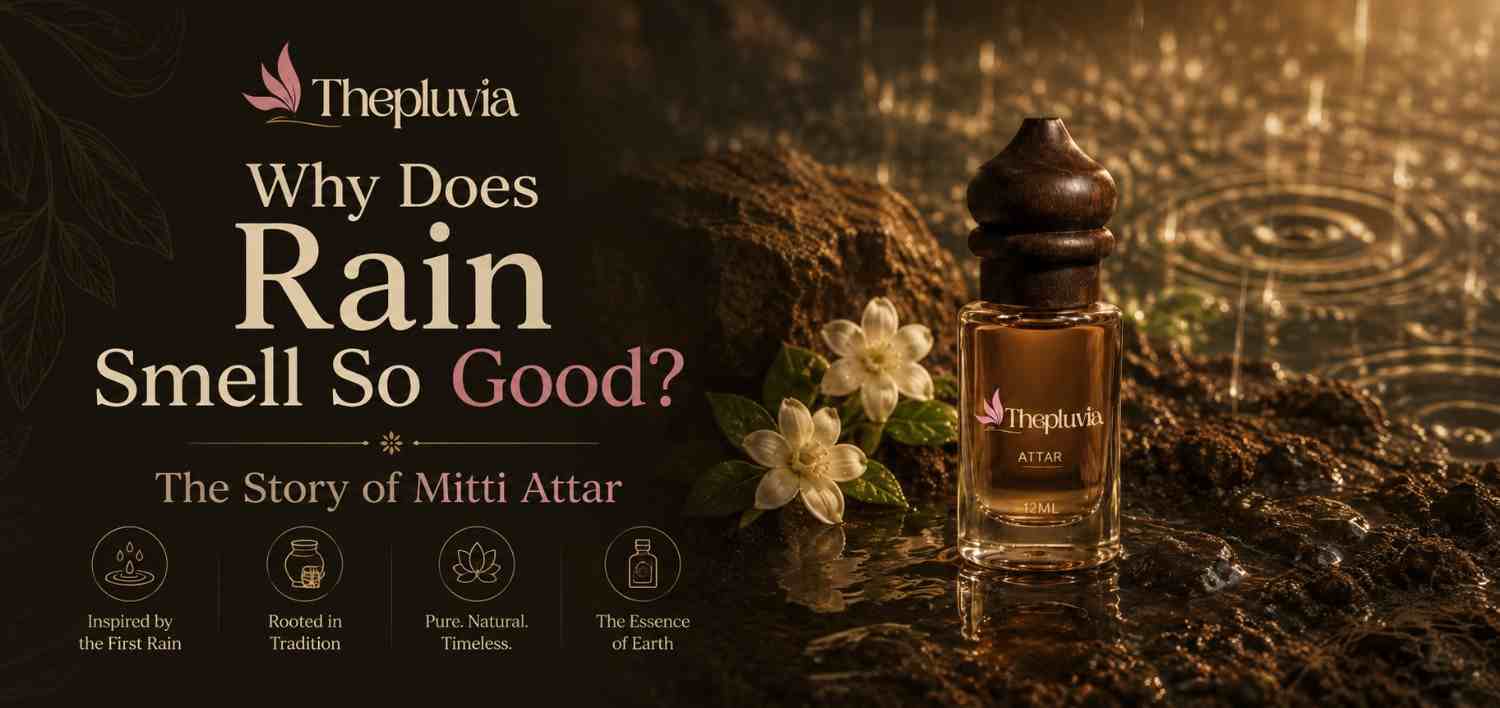
The smell of rain can evoke a powerful sense of freshness, earth, and nostalgia. That distinctive aroma comes from several natural processes that occur when rain reaches dry soil. Indian perfumery captures this character through mitti attar, a traditional fragrance associated with the scent of wet earth. Its appeal comes from its earthy, mineral, smoky, and slightly woody character. Moreover, traditional distillation techniques transform the aroma of baked clay and moisture into an oil-based fragrance that people can wear and appreciate beyond the rainy season.
What Makes Rain Smell So Distinctive?
Rain itself has very little smell. The familiar aroma appears when falling water interacts with soil, plants, minerals, and microorganisms. After a prolonged dry period, the ground accumulates aromatic compounds. When rain strikes the surface, tiny droplets and air movement help release these compounds into the atmosphere.
The Role of Dry Soil
Dry soil can retain various aromatic molecules between its particles. When moisture arrives, water disturbs the soil structure and encourages these compounds to move into the surrounding air. Consequently, the nose detects an earthy fragrance that feels fresh and familiar.
The intensity depends on several conditions:
- Length of the dry period.
- Soil composition.
- Temperature before rainfall.
- Amount of rainfall.
- Presence of vegetation.
- Local humidity.
- Organic material within the soil.
Therefore, rain can smell different from one location to another.
What Is Petrichor?
The word petrichor describes the pleasant earthy scent associated with rain falling on dry ground. Scientists use the term to describe a mixture of aromatic compounds released during rainfall. One important contributor is geosmin, a compound produced by certain soil microorganisms.
How Geosmin Contributes to Earthy Aroma
Geosmin possesses a strong earthy character that humans can detect at extremely low concentrations. Certain microorganisms produce it naturally in soil. During rainfall, water movement can help release geosmin into the air.
However, geosmin represents only part of the complete rain aroma. Plant oils, atmospheric compounds, soil minerals, and other substances can contribute as well. The final smell therefore results from several interactions rather than one single ingredient.
Why Humans Enjoy the Smell of Rain
The attraction to rain’s earthy aroma involves both sensory perception and emotional association. A familiar smell can trigger memories of particular places, seasons, landscapes, or family surroundings.
The Connection Between Smell and Memory
The sense of smell has a strong relationship with memory and emotion. Consequently, an earthy rain scent may remind someone of wet soil, gardens, farms, courtyards, or monsoon evenings.
Cultural surroundings can also influence fragrance preferences. In India, seasonal rainfall has significant environmental and social importance, so the scent of wet earth often carries a strong sense of place.
What Is Mitti Attar?
Mitti attar is a traditional Indian perfume oil designed to capture the characteristic aroma of wet earth. Traditional production commonly uses baked clay or earthen material and a distillation process that transfers aromatic characteristics into a base oil.
The resulting fragrance does not simply smell like ordinary mud. Instead, it can combine earthy, mineral, smoky, woody, dry, and slightly sweet impressions.
The Meaning of Mitti
“Mitti” refers to earth or soil in several Indian languages. Within perfumery, the expression points toward the characteristic smell associated with rain-moistened earth.
Mitti attar therefore represents more than a generic earthy perfume. It attempts to preserve a sensory impression associated with rainfall and freshly wet ground.
How Traditional Mitti Attar Is Produced
Traditional mitti attar production involves carefully prepared clay and a distillation process. Artisans typically shape clay into small pieces or vessels and heat them until they develop a suitable baked character.
Preparing the Clay
The clay must possess suitable physical and aromatic qualities. After preparation, artisans bake it to create terracotta-like material. The heating process removes moisture and changes the character of the clay.
Once the baked clay reaches the required condition, artisans break it into pieces and prepare it for distillation.
Distilling the Earthy Aroma
Traditional deg-and-bhapka-style equipment can support the distillation process. Water and heated clay interact inside the distillation vessel, while aromatic vapours travel toward a receiving container containing a base oil.
The base gradually absorbs the aromatic character. Repeated processing can deepen the fragrance and create a richer final profile.
Why Sandalwood Oil Can Be Used as a Base
Traditional attar production often uses sandalwood oil as a receiving base because it can hold aromatic materials effectively and provide its own smooth woody character.
How the Base Influences the Fragrance
The base does more than carry aromatic compounds. It can influence the final texture, depth, persistence, and dry-down.
In mitti attar, the woody character of the base can complement the mineral and earthy qualities derived from baked clay. Consequently, the final fragrance can feel smoother than the raw smell of wet soil.
Mitti Attar Does Not Literally Contain Rain
A common misconception involves the idea that mitti attar contains actual rainwater. Traditional production does not simply collect rain and preserve it inside perfume oil.
Capturing the Aroma Instead
The process captures aromatic characteristics associated with wet earth. Heated clay and water create an environment that transfers those characteristics into the receiving base.
Therefore, mitti attar recreates a sensory impression rather than storing rain itself. This distinction explains why the finished perfume can retain an earthy character long after the monsoon season ends.
What Does Mitti Attar Smell Like?
Mitti attar generally presents a dry, earthy, mineral-like character with smoky and woody undertones. Some formulations may feel slightly sweet, while others can appear more austere and dusty.
Its Main Fragrance Characteristics
A typical mitti profile may suggest:
- Wet clay.
- Dry earth after rainfall.
- Mineral warmth.
- Soft smoke.
- Woody depth.
- Subtle sweetness.
- Green environmental nuances.
The exact balance varies according to raw materials, distillation methods, base materials, and production conditions.
Mitti Attar and the Indian Monsoon
The connection between mitti attar and the monsoon gives this fragrance a distinctive cultural identity. Rain transforms dry landscapes, lowers dust, changes soil moisture, and brings vegetation back to life.
Why the Monsoon Shapes Its Appeal
The scent of wet earth often marks a transition from dryness to renewed moisture. That contrast makes the aroma particularly memorable.
Moreover, mitti attar allows people to experience an earthy fragrance outside the natural rainy season. A small application can recreate an atmospheric impression associated with rain without using a conventional fresh or aquatic perfume profile.
Mitti Attar Versus Modern Rain Fragrances
Modern perfumes can recreate rainy atmospheres through synthetic aroma materials, aquatic accords, green notes, ozonic impressions, and mineral effects. Mitti attar follows a different sensory direction.
Earthy Versus Aquatic Profiles
Rain-inspired modern fragrances often emphasize cool air, watery freshness, or green vegetation. Mitti attar usually focuses more strongly on earth, clay, dryness, and mineral warmth.
Neither approach automatically provides superior quality. They simply create different interpretations of rainfall.
Why Mitti Attar Feels Different From Other Attars?
Many attars emphasize flowers, woods, spices, fruits, herbs, or traditional perfume blends. Mitti attar stands apart because its central inspiration comes from soil and rain.
A Fragrance Built Around Atmosphere
Instead of presenting a familiar floral or woody bouquet, mitti attar creates an environmental impression. It can suggest a place, season, and weather condition through scent.
This atmospheric quality makes it especially appealing to people who prefer unusual fragrance profiles. Furthermore, its earthy character can pair well with woody, resinous, herbal, and smoky compositions.
How to Apply Mitti Attar?
Because mitti attar remains concentrated, a small amount usually provides sufficient fragrance. Apply a modest quantity to pulse points such as the wrists, neck, or behind the ears.
Use Small Amounts
Start with one light application and allow it to settle. The fragrance can develop as the skin warms it.
Avoid rubbing the application area aggressively. Instead, allow the oil to remain naturally on the skin. If the initial scent feels too subtle after settling, add a small amount rather than applying a heavy layer immediately.
When Should You Wear Mitti Attar?
Mitti attar can suit casual settings, quiet evenings, cultural occasions, and personal fragrance routines. Its earthy character may also work particularly well during rainy weather.
Seasonal and Social Considerations
During the monsoon, mitti attar can complement the natural atmosphere. However, its earthy character can also work during cooler months when deeper fragrances feel comfortable.
For offices and enclosed spaces, use a restrained quantity. At social gatherings, you can apply slightly more if the venue permits stronger fragrance.
Who May Prefer Mitti Attar?
Mitti attar can appeal to people who prefer unconventional fragrance profiles rather than sweet or highly floral perfumes.
Suitable Fragrance Preferences
It may suit individuals who enjoy:
- Earthy aromas.
- Woody fragrances.
- Mineral impressions.
- Smoky nuances.
- Traditional Indian perfume styles.
- Subtle atmospheric scents.
- Non-sweet fragrance profiles.
Nevertheless, fragrance remains subjective. Testing a small amount on skin provides a more reliable indication of suitability.
How to Choose Quality Mitti Attar
Quality assessment requires more than judging the bottle or price. Buyers should examine ingredient information, production descriptions, packaging, quantity, and seller transparency.
Important Buying Factors
Before purchasing, consider:
- Clarity of the fragrance description.
- Stated ingredients or base materials.
- Bottle quantity.
- Manufacturing or packaging details.
- Application instructions.
- Storage directions.
- Seller contact information.
- Return or replacement policies.
A transparent product description makes comparison easier.
Buying Mitti Attar Online
Online fragrance shopping requires additional attention because buyers cannot smell the product before delivery. Product descriptions should provide useful information about the fragrance profile and formulation.
What to Check Before Ordering?
When you buy mitti attar online in India, review the product description carefully. Check the quantity, stated ingredients, fragrance characteristics, application directions, packaging information, and seller policies.
Avoid selecting a product solely because it promises extraordinary longevity or absolute authenticity without explaining its formulation. Clear information provides a stronger basis for a purchase.
How to Store Mitti Attar?
Storage can affect fragrance quality. Keep the bottle tightly closed and place it in a cool, dry location away from direct sunlight.
Protect the Fragrance From Heat
Avoid storing mitti attar near windows, heaters, kitchens, or inside vehicles. Excessive heat can alter aromatic materials and affect the fragrance profile.
A dark cupboard or drawer can provide a practical storage environment. Furthermore, minimizing repeated exposure to air can help preserve the product over time.
Skin Safety When Using Mitti Attar
Mitti attar is a concentrated fragrance product, so users should apply it carefully. Natural or traditional ingredients can still cause skin sensitivity in some individuals.
Basic Precautions
Follow these practices:
- Apply a small amount initially.
- Avoid broken or irritated skin.
- Keep fragrance away from the eyes.
- Consider a patch test with an unfamiliar product.
- Stop use if significant irritation develops.
- Follow product-specific instructions.
These precautions support responsible fragrance use.
Why Mitti Attar Has Lasting Cultural Value?
Mitti attar connects fragrance with landscape, weather, craftsmanship, and seasonal change. Its appeal comes from the ability to translate an environmental experience into a wearable perfume.
From Earth to Perfume
The journey begins with clay and ends with a concentrated aromatic oil. That transformation gives mitti attar a distinctive place within Indian perfumery.
Moreover, the fragrance preserves an impression of rain without relying on a conventional aquatic scent structure. Its identity remains grounded in soil, clay, heat, water, and traditional distillation.
Conclusion
Mitti attar captures one of nature’s most familiar fragrances: the earthy aroma that appears when rain reaches dry ground. Its character comes from the interaction of clay, water, heat, distillation, and a perfume base. Unlike aquatic fragrances that emphasize cool water or fresh air, mitti attar focuses on earth, mineral warmth, and the atmosphere of rainfall. That distinctive character gives it lasting appeal within Indian perfumery. With suitable application, careful storage, and informed selection, mitti attar can provide a refined connection to the scent of wet earth.
FAQs
Why does rain smell so good?
Rain creates an earthy aroma when water interacts with dry soil and releases compounds into the air. Geosmin contributes strongly to the characteristic smell, while plant oils and other environmental compounds add complexity. The resulting scent can feel fresh, earthy, mineral-like, and emotionally familiar.
What is mitti attar made from?
Traditional mitti attar commonly uses baked clay or earthen material during distillation, with a receiving base such as sandalwood oil in traditional production. The process transfers aromatic characteristics associated with wet earth into the base. Commercial formulations can differ, so product-specific information remains important.
Does mitti attar actually contain rainwater?
No. Traditional mitti attar does not preserve rainwater inside the perfume. Instead, the distillation process captures aromatic characteristics associated with wet earth. Heated clay, water, steam, and a receiving base work together to transfer the earthy scent into perfume oil.
What does mitti attar smell like?
Mitti attar commonly smells earthy, mineral-like, dry, woody, and slightly smoky. Some formulations may also present subtle sweetness or green nuances. The exact profile depends on clay preparation, distillation technique, base material, and production conditions. Consequently, different mitti attars can smell noticeably different.
Is mitti attar suitable for men and women?
Yes. Mitti attar does not need to follow a gender-specific fragrance category. Its earthy and mineral character can suit anyone who enjoys traditional, atmospheric perfume oils. Application quantity should depend on personal preference, fragrance intensity, climate, and setting rather than gender.
How long does mitti attar last?
Longevity varies according to formulation, concentration, base material, skin chemistry, temperature, and application quantity. Traditional oil-based fragrances can remain noticeable for several hours, but performance differs between products. Testing the fragrance on skin provides a more reliable assessment than relying on a fixed duration.
Can mitti attar be worn every day?
Yes, provided the fragrance suits your routine and you apply it moderately. Its earthy profile can work well for casual use, especially during rainy or cooler conditions. In offices and enclosed spaces, use a smaller amount to maintain a comfortable fragrance level.
Is mitti attar natural?
Traditional mitti attar relies heavily on clay, water, botanical or woody bases, and distillation techniques. However, commercial products can vary considerably in formulation. Therefore, buyers should check the stated ingredients and production information rather than assume that every product sold as mitti attar follows an identical traditional process.
How should mitti attar be stored?
Store mitti attar in a cool, dry, dark place with the bottle tightly closed. Keep it away from direct sunlight, excessive heat, humidity, and hot vehicles. Proper storage can help maintain its aromatic character and reduce unnecessary changes caused by heat and prolonged air exposure.
Why is mitti attar associated with Indian perfumery?
Mitti attar reflects traditional Indian perfume practices that use distillation to capture distinctive natural aromas. Its association with wet earth and the monsoon gives it a strong sensory connection with India’s landscapes and seasonal rainfall. The fragrance also represents the transformation of ordinary clay into a refined perfume material.